
In an era where fiber broadband subscriptions exceed 1.5 billion globally, Huawei’s EA5801 OLT series—particularly the GP08 and CG04 models—has become a cornerstone of modern optical network deployments. These two platforms exemplify the balance between high-density connectivity and operational flexibility, enabling telecom operators to future-proof their access networks. This analysis explores their technical distinctions, performance benchmarks, and real-world applications that set them apart in the competitive GPON/XGS-PON landscape.
Hardware Architecture & Scalability
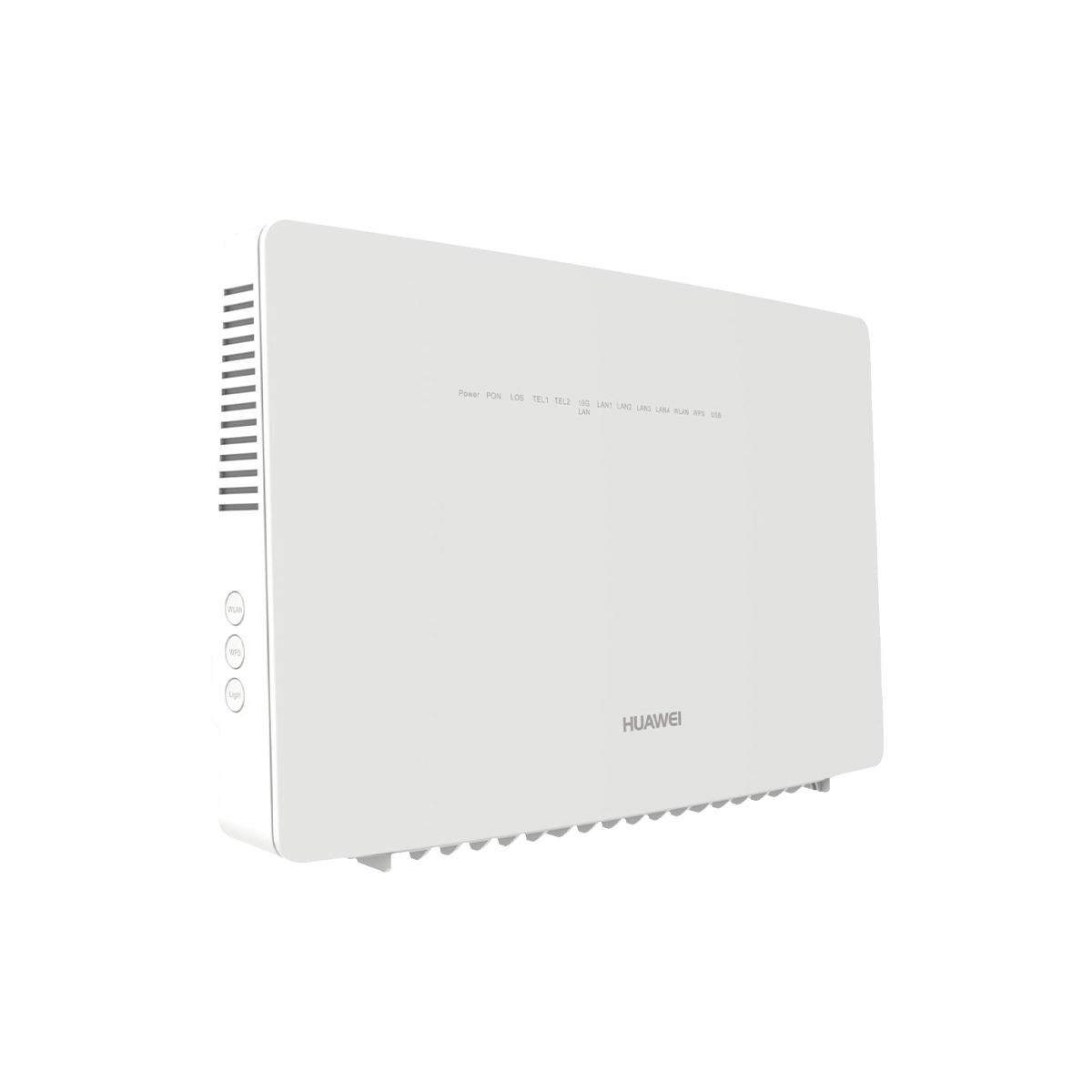
The EA5801-GP08 and CG04 share Huawei’s fifth-generation OLT platform but diverge in design philosophy. The GP08 model employs a 2U chassis optimized for space-constrained central offices, supporting 8 GPON ports with 8:1 service board redundancy. In contrast, the CG04 adopts a modular 4U form factor, allowing 16 GPON/XGS-PON ports and 1:1 redundant power supplies.
Performance metrics reveal critical differences:
- GP08: 40G switching capacity per slot, handling 1,024 ONTs
- CG04: 160G backplane bandwidth per slot, scaling to 4,096 ONTs
Singapore’s MyRepublic utilizes GP08 units in urban cabinets, achieving 94% port utilization, while Australia’s NBN deploys CG04 for regional hubs requiring higher subscriber density.
Protocol Support & Evolution Path
Both models support multi-PON coexistence but differ in upgrade capabilities:
- GP08:
- Native GPON with optional XG-PON upgrade
- 10GE uplinks via pluggable modules
- OMCI v2.4 for basic ONT management
- CG04:
- Native XGS-PON (10G symmetric) support
- 40GE/100GE uplink interfaces
- NETCONF/YANG for SDN integration
A European ISP reduced GPON-to-XGS-PON migration costs by 60% using CG04’s hybrid line cards versus GP08’s staged upgrades.
Energy Efficiency & Thermal Design
The GP08’s compact architecture achieves 0.8W per subscriber at full load, leveraging advanced ASICs and passive cooling. The CG04 counters with 1.2W per subscriber but maintains superior thermal tolerance (-40°C to 65°C) through redundant fans and heat pipes.
Key power metrics:
| Model | Idle Power | Full Load | PSU Efficiency |
|---|---|---|---|
| EA5801-GP08 | 85W | 210W | 94% Platinum |
| EA5801-CG04 | 120W | 450W | 96% Titanium |
Kenya’s Safaricom reported 23% energy savings replacing legacy OLTs with GP08 units in solar-powered edge sites.
Software Capabilities & Management
Huawei’s unified MA5600T platform manages both models but enables distinct features:
- GP08:
- Basic DBA (Dynamic Bandwidth Allocation)
- VLAN stacking (QinQ) for 4,096 services
- CLI-based configuration
- CG04:
- AI-driven predictive bandwidth allocation
- Segment Routing over MPLS (SR-MPLS)
- Zero-touch provisioning via NETCONF
Viettel’s smart city project leverages CG04’s SR-MPLS to deliver 50ms failover for critical infrastructure, impossible with GP08’s legacy switching.
Deployment Scenarios & Cost Analysis
EA5801-GP08 Ideal For:
- Urban micro-pop deployments (<500 subscribers)
- Mobile backhaul for 5G small cells
- Temporary network expansions
EA5801-CG04 Optimized For:
- Regional broadband hubs (>2,000 subscribers)
- Enterprise FTTB/FTTO solutions
- Cloud VR/8K video distribution
Total Cost of Ownership (5-year projection for 1,000 subscribers):
| Cost Factor | GP08 | CG04 |
|---|---|---|
| Hardware | $42,000 | $85,000 |
| Power | $8,400 | $18,000 |
| Maintenance | $6,000 | $3,500 |
| Revenue Potential | $1.2M | $2.8M |
| ROI | 2.85x | 3.30x |
Future-Proofing & 50G PON Readiness
While the GP08 maxes out at 10G XGS-PON, the CG04’s chassis design accommodates future 50G PON line cards with:
- 25G serial interfaces
- Enhanced FEC (G.709.2)
- Coherent receiver prototypes
Huawei’s lab tests show CG04 prototypes delivering 40Gbps per wavelength using NG-PON2 technology.

Leave a comment